




The Benefits of Insulating Your Chimney Liner
In New Hampshire and throughout New England, we know about the value of home insulation. But not everyone realizes that a chimney’s liner can also be insulated.
Fire N’ Stone of Tilton, NH, would like to tell you a little about the benefits of having your chimney liner insulated.
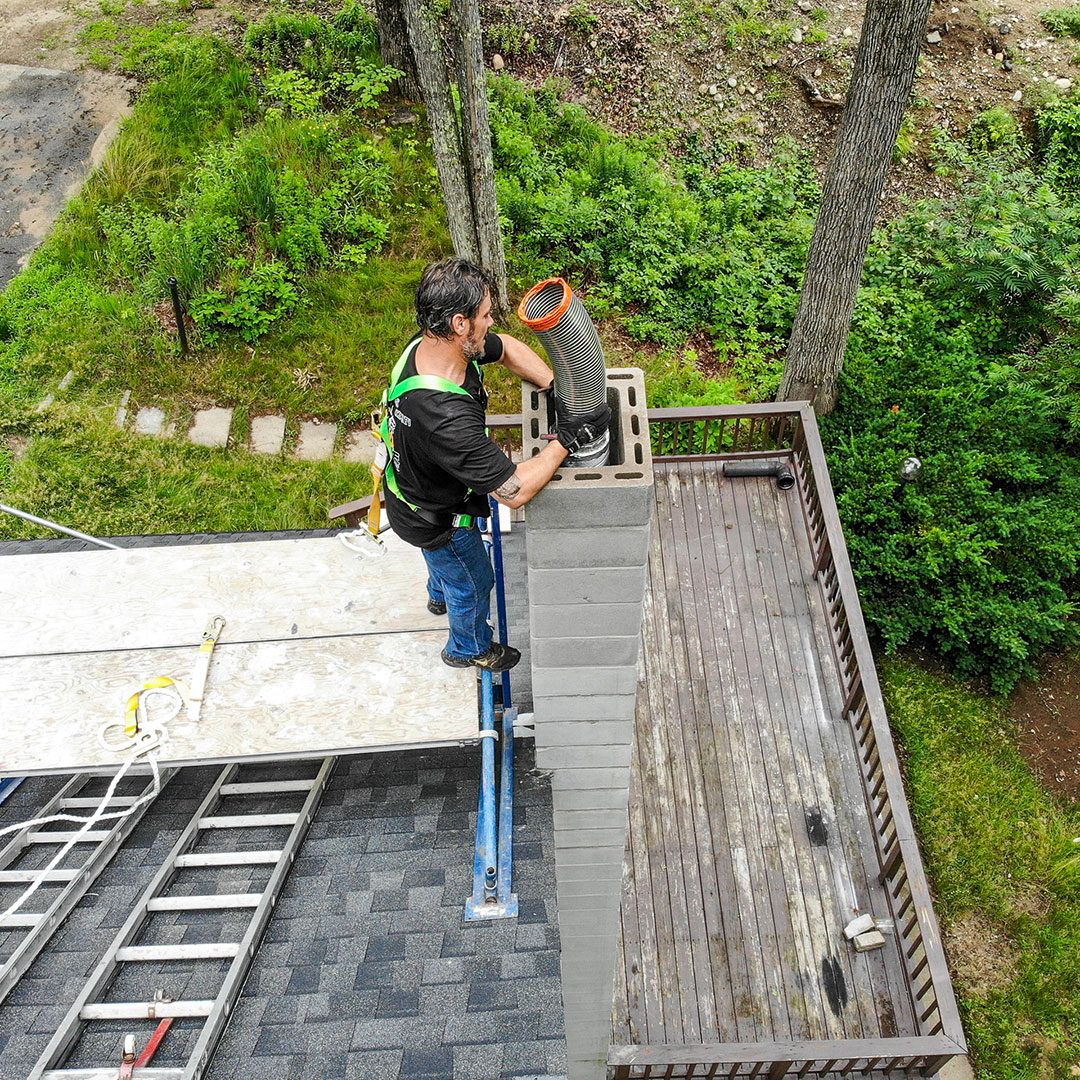 How do you insulate a chimney liner?
Insulating a chimney liner isn’t a do-it-yourself project. This work should only be done by trained chimney technicians.
Service providers in other parts of the country may have their own ways of adding insulation around a chimney liner, but here in the Northeast, we like to use one of two methods.
- Insulation blanket for chimney liners
The simplest method is called an “insulation blanket.” It’s made of alkaline earth silicate, which forms a dense insulation barrier. We wrap the blanket around all parts of the exterior chimney liner.
Important note: We do not recommend attempting to install any type of chimney liner insulation yourself.
- Chimney liner insulation with vermiculite and cement
If very little room exists around your flue, the blanket might not be practical. In tight chimney spaces, we like to use a poured-in-place insulation that’s a mixture of vermiculite and Portland cement. The material takes about a week to set and provides a safe and efficient barrier against outside temperatures.
Flue liner insulation: key benefits
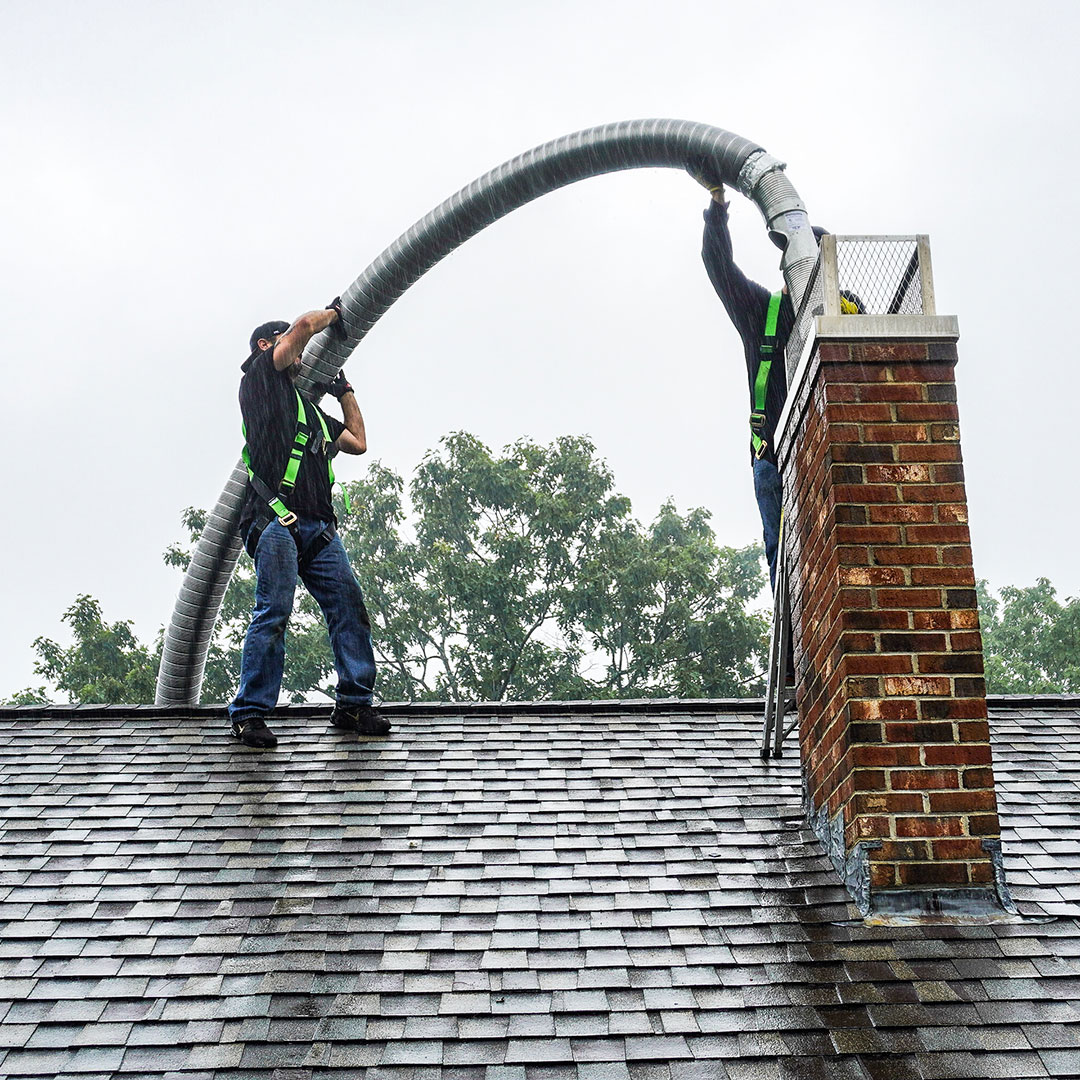
Here are some of the most important benefits of having your chimney liner properly insulated.
Less cold air in the flue
A flue not protected by insulation will fill with a lot of cold winter air and take longer to warm up and start drafting efficiently. Cold air is heavier than hot air, which can cause smoke and combustion gases to be in the flue for longer periods and may actually send them out of the fireplace and into your room.
Less creosote
The longer smoke is in the flue, the more creosote that’s going to develop. Creosote is highly flammable and is the cause of most of the reported chimney fires in the Tilton, NH, area each year. Warmer flue air will encourage smoke to move up through the flue faster and more efficiently.
Less condensation
You’ll create less flue condensation moisture during fireplace use when the air in the flue is more temperate. Excess moisture can mix with creosote and soot and produce some pretty powerful odors.
Less fuel waste
Fires that burn and draft into the chimney with greater efficiency need less firewood to achieve the desired results.
Have your chimney liner professionally insulated
If it’s time to look into chimney liner insulation, Fire N’ Stone is ready to get to work. We’ll inspect your chimney and its liner and recommend the best insulation solution.
When we’re finished, you should notice immediate differences in the problems listed above. Chimney liner insulation can literally transform the fireplace and chimney experience for homeowners in cold-weather regions.
Learn more about having your liner fitted with secure insulation by giving us a call. You can also get in touch through our simple contact form.

 Visit Our Showroom